What PSI Concrete Do I Need for a Driveway?
“What PSI concrete do I need?”
The short answer is that for most exterior concrete driveways, patios, sidewalks, and flatwork in Central Indiana, 4,000 PSI air-entrained concrete is a strong minimum standard. For upgraded or heavier-duty performance, 4,500 PSI concrete can be a smart upgrade.
Indiana weather is hard on concrete. Freeze-thaw cycles, rain, snow, ice, deicing salt, heavy vehicles, clay soil, and seasonal movement all make the concrete mix important—but PSI is only one part of a successful project.
3000 PSI vs. 4000 PSI vs. 4500 PSI Concrete
Here is the simple homeowner version.
| Concrete Strength | What It Means | Best Use |
|---|---|---|
| 3000 PSI | Lower-strength concrete often used for basic or builder-grade work | Not our preferred choice for Central Indiana exterior driveways |
| 4000 PSI | Stronger mix and a good standard for exterior flatwork | Driveways, patios, sidewalks, and slabs exposed to Indiana weather |
| 4500 PSI | Upgraded strength mix | Premium driveways, heavier use, better durability, and added peace of mind |
The best driveway combines concrete strength with slab thickness, proper base preparation, drainage, reinforcement, and control joints.
What Does PSI Mean in Concrete?
PSI stands for pounds per square inch. When someone says “4,000 PSI concrete,” they are describing the concrete’s designed compressive strength—how much compression it is designed to handle after it cures.
Concrete is generally tested and rated at around 28 days. The higher the PSI number, the stronger the concrete is designed to be in compression.
For residential driveways and exterior flatwork, the goal is not simply to order the highest number possible. The goal is to select the right mix for the environment and application. In Central Indiana, that usually means at least a quality 4,000 PSI air-entrained mix.
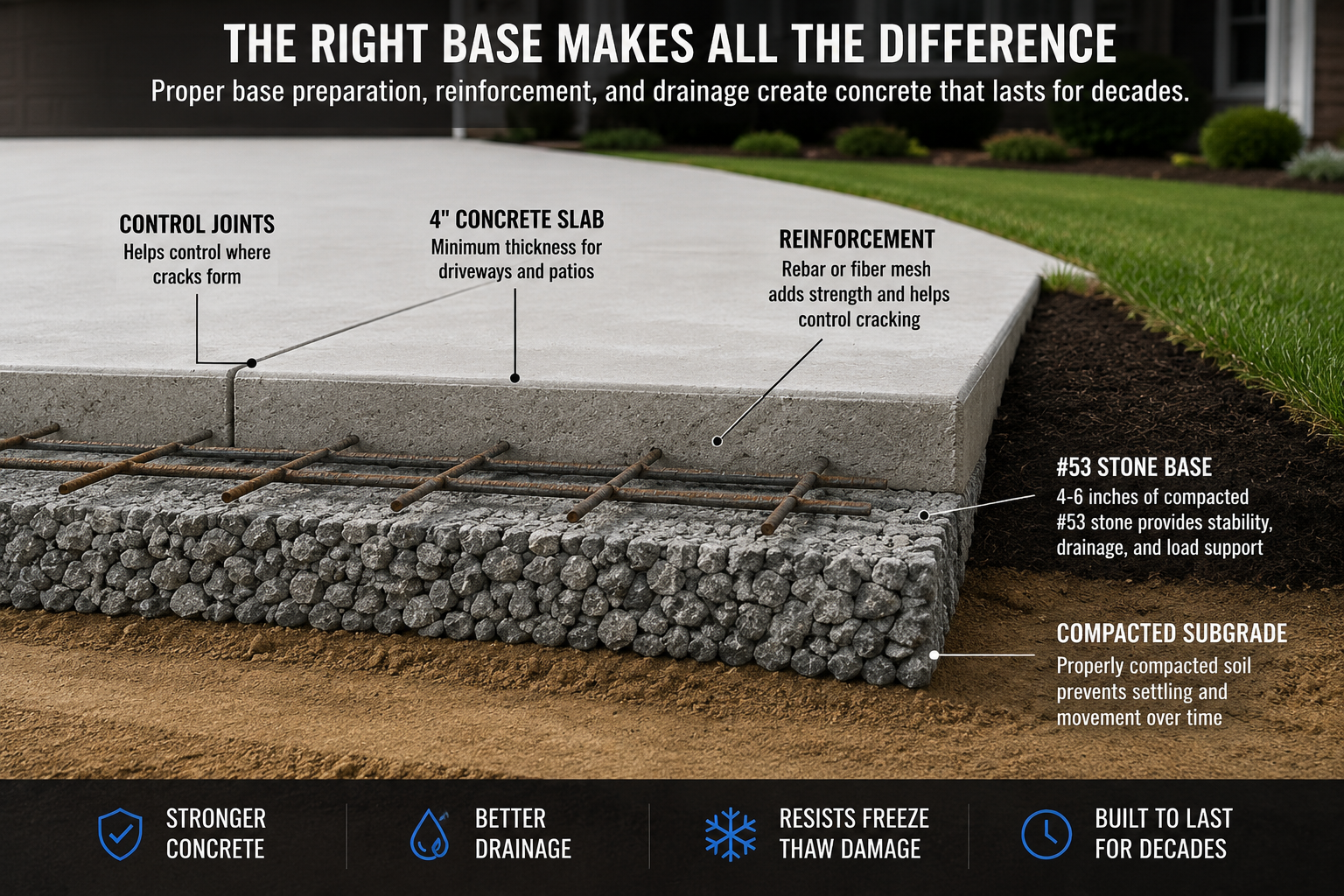
Concrete PSI matters, but the base, thickness, reinforcement, drainage, and control joints matter too.
Why Concrete PSI Matters in Indiana
Central Indiana is not an easy climate for exterior concrete.
Freeze-Thaw Cycles
Water expands when it freezes, creating pressure that can contribute to cracking, scaling, and surface damage.
Moisture & Ice
Rain, snow, ice, and moisture in the ground repeatedly expose the concrete to harsh conditions.
Vehicle Loads
Driveways must handle daily traffic, heavy vehicles, garage approaches, and concentrated loads.
Clay Soil
Seasonal movement, drainage, and changing soil moisture make base preparation especially important.
A stronger mix, combined with proper air entrainment and professional installation, gives your driveway a better chance to perform through Indiana weather.
Is 4000 PSI Concrete Good for a Driveway?
Yes. For most residential driveways in Central Indiana, 4,000 PSI air-entrained concrete is a good standard. It offers a practical balance of strength, cost, workability, and long-term durability.
A 4,000 PSI driveway with a proper base, correct thickness, good drainage, and correctly placed joints can outperform a higher-strength mix installed over a bad base.
Concrete PSI matters. Installation matters just as much.
Is 4500 PSI Concrete Worth It?
For many homeowners, 4,500 PSI concrete is a worthwhile upgrade. It may be a smart choice for driveway approaches, extensions, garage aprons, heavier vehicle areas, commercial flatwork, and high-use residential concrete.
Higher PSI normally costs more, but the mix upgrade is usually small compared with the total cost of demolition, excavation, forming, base preparation, labor, finishing, cutting, equipment, and cleanup.
4000 PSI vs. 4500 PSI Concrete
4000 PSI Concrete
A strong baseline for many residential exterior projects, including driveways, patios, sidewalks, and slabs exposed to freeze-thaw weather.
- Good strength-to-cost balance
- Suitable for most residential driveways
- Should be air-entrained for Indiana weather
4500 PSI Concrete
A higher-rated mix for homeowners who want added strength, premium driveway construction, or improved performance under heavier use.
- 12.5% higher rated strength than 4000 PSI
- Ideal for premium and heavier-use areas
- Added durability and peace of mind
For most standard residential projects, 4,000 PSI air-entrained concrete is a good minimum. For premium or heavier-use driveways, consider 4,500 PSI.
Explore Concrete Driveways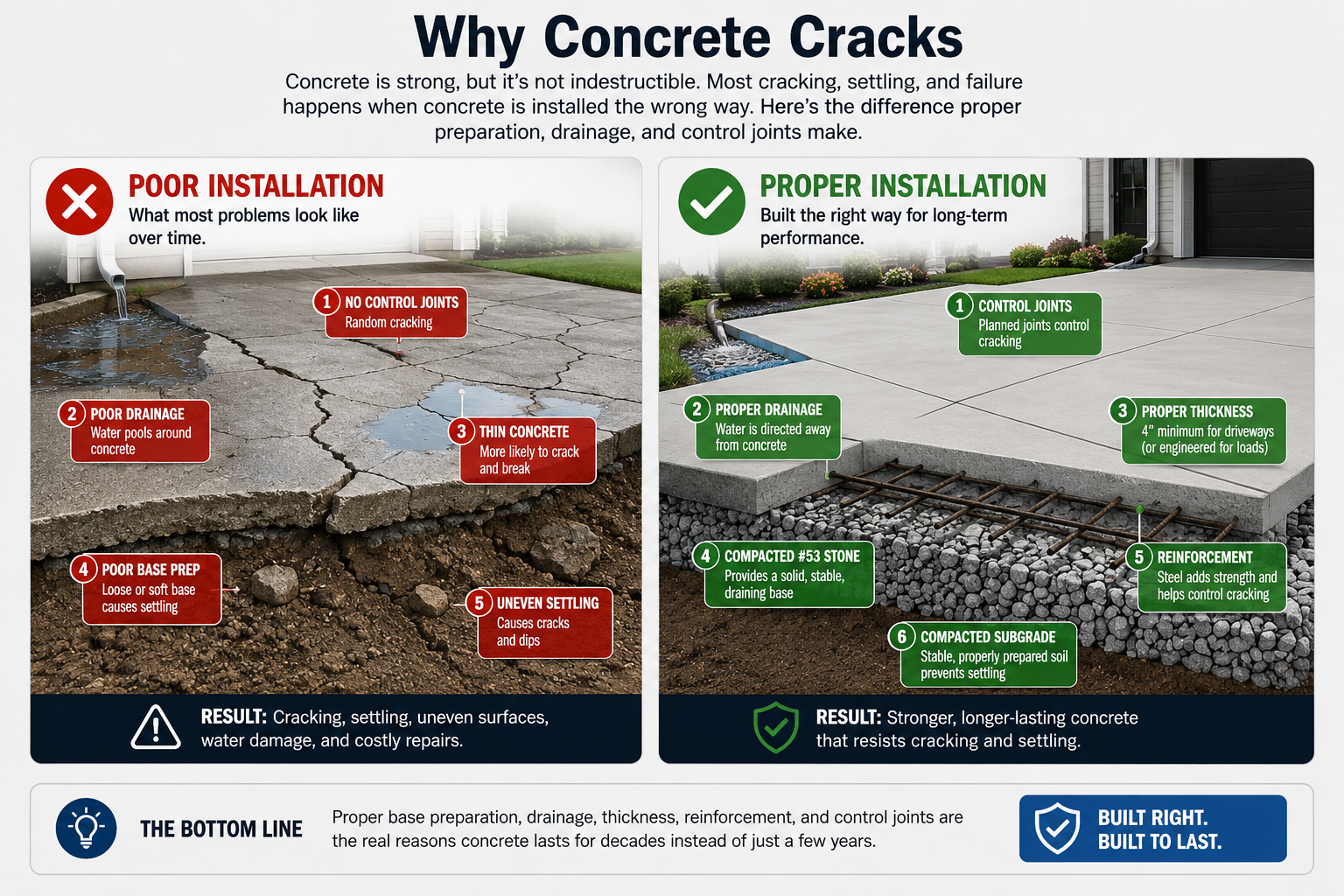
PSI Is Not Everything
A 4,500 PSI mix poured too thin over a bad base can still crack, settle, or fail. A 4,000 PSI mix installed correctly can be an excellent driveway.
- Proper excavation
- Prepared subgrade
- Compacted stone base
- Correct slab thickness
- Proper slope and drainage
- Control and expansion joints
- Appropriate reinforcement
- Good finishing practices
- Proper curing conditions
- Experienced installation crew
Learn more about why concrete cracks and how installation decisions affect performance.
Do Not Water Down the Concrete
One of the fastest ways to weaken concrete is to add too much water. Extra water may make concrete easier to place briefly, but it can reduce strength, increase shrinkage, weaken the surface, and increase vulnerability to future problems.
If improved workability is needed, proper mix design or admixtures are generally better than dumping extra water into the truck on site.
Why Higher PSI Concrete Costs More
A higher-strength mix is more demanding to produce. The ready-mix supplier may use:
- More cementitious material
- A lower water-to-cementitious-material ratio
- Water-reducing admixtures
- Different aggregate proportions
- More exact batching and mix control
You are not simply paying for a bigger number—you are paying for a stronger mix design and tighter production requirements.
Why Air-Entrained Concrete Matters
Air-entrained concrete contains tiny air bubbles intentionally created in the mix. These microscopic pockets give freezing water room to expand and help reduce the risk of surface scaling and freeze-thaw damage.
For exterior concrete in Central Indiana, you want both:
Handles Seasonal Exposure
Designed to better tolerate repeated freezing, thawing, moisture, snow, and ice.
Protects the Surface
Microscopic air pockets reduce internal pressure and help lower the risk of scaling.
What About 3000 PSI Concrete?
3,000 PSI may appear in builder-grade work, basic slabs, or cheaper quotes, but it is not Concrete Indy’s preferred choice for exterior driveways in Central Indiana.
If a quote is cheaper, ask what PSI is included—and whether it includes air entrainment, correct thickness, a compacted base, control joints, reinforcement, removal, and responsible water handling.
A cheaper concrete quote may not be the same concrete project.
Does Higher PSI Prevent Cracking?
Higher PSI makes concrete stronger, but it does not make it crack-proof. Cracking is also influenced by shrinkage, soil movement, base preparation, joint spacing, loads, drainage, tree roots, freeze-thaw movement, slab restraint, and thin spots.
The goal is to build correctly so cracking is less likely and, when natural shrinkage cracking occurs, it is encouraged to happen inside control joints.
A Note About Type IL Cement
Type IL cement, also called portland-limestone cement, is commonly used by ready-mix suppliers. It includes finely ground limestone and is designed to reduce concrete’s carbon footprint.
Type IL cement does not automatically mean weaker concrete. Strength depends on the full mix design. A 4,000 PSI or 4,500 PSI mix still needs to be proportioned and produced to meet its specified strength.
The better questions are whether the concrete is designed for the correct PSI, air-entrained, appropriate for exterior flatwork and freeze-thaw exposure, handled responsibly, and installed correctly.
The Full Recipe Matters
Performance depends on cementitious materials, water, aggregate, air, admixtures, batching, placement, finishing, and curing—not one ingredient alone.
Concrete Indy’s Recommendation
For most exterior concrete projects in Central Indiana, start with a quality 4,000 PSI air-entrained concrete mix. For an upgraded driveway mix, heavier-duty surface, or extra peace of mind, 4,500 PSI is a strong option.
We also focus on proper excavation, compacted base material, correct thickness, slope and drainage, control joints, expansion joints where needed, reinforcement when appropriate, quality finishing, a clean jobsite, and professional installation.
The concrete mix matters. The installation matters too.
Planning a driveway?
Talk with our team about the right mix and installation system for your property.
Get a Free EstimateCall 317-643-5511Concrete PSI Driveway FAQs
Get the Right Concrete Mix for Your Driveway
A cheap quote can hide a lower-strength mix, poor base preparation, or shortcuts. Concrete Indy focuses on the right concrete mix, proper base, correct thickness, control joints, drainage, and professional installation.