CONCRETE CLEANING, SEALING & RESTORATION

Concrete Sealing in Indianapolis for Driveways, Patios & Stamped Concrete

Concrete Indy cleans and seals broom-finish driveways, patios, sidewalks and stamped concrete throughout Indianapolis and Central Indiana. We typically recommend a penetrating water-based sealer for broom-finish concrete and a compatible color-enhancing solvent-based sealer for stamped concrete—because one sealer is not right for every surface.

Have a newer home or driveway that needs to be sealed before winter? In many cases, we can review your address, photographs and aerial measurements and prepare a remote quote without making you wait for an in-person appointment.

Remote quotes are often available when the surface and property measurements can be clearly reviewed.
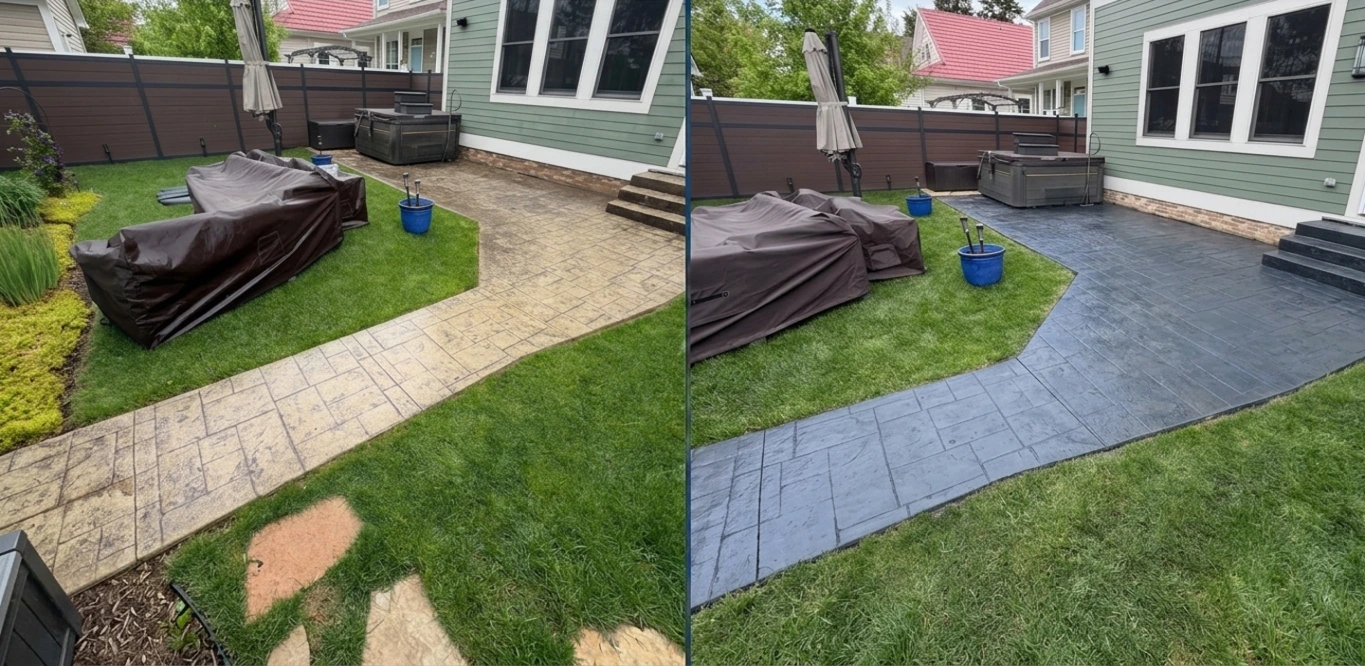
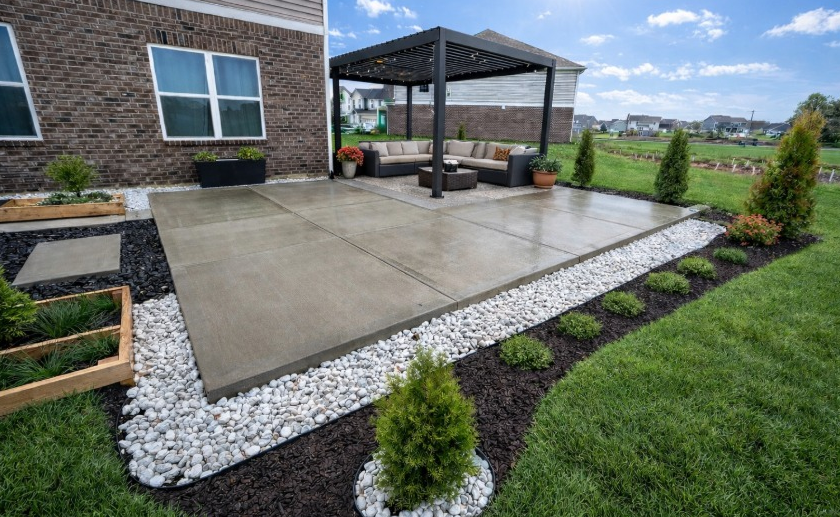
Dark gray stamped concrete patio beside a brick home
400+ Five-Star Reviews
Locally Owned
In-House Crews
Licensed, Bonded & Insured

Different Concrete Finishes Need Different Sealers

Professional concrete sealing begins by identifying the surface, the existing coating and the desired appearance. The correct system depends on whether the concrete is broom-finished, stamped, exposed aggregate, previously sealed or already experiencing coating failure.
Concrete Indy does not treat every driveway and patio with the same product. Penetrating sealers and decorative film-forming sealers perform different jobs and create very different finished appearances.

New broom-finish concrete patio with picture-frame borders and concrete steps

Broom-Finish Concrete: Penetrating Water-Based Sealer

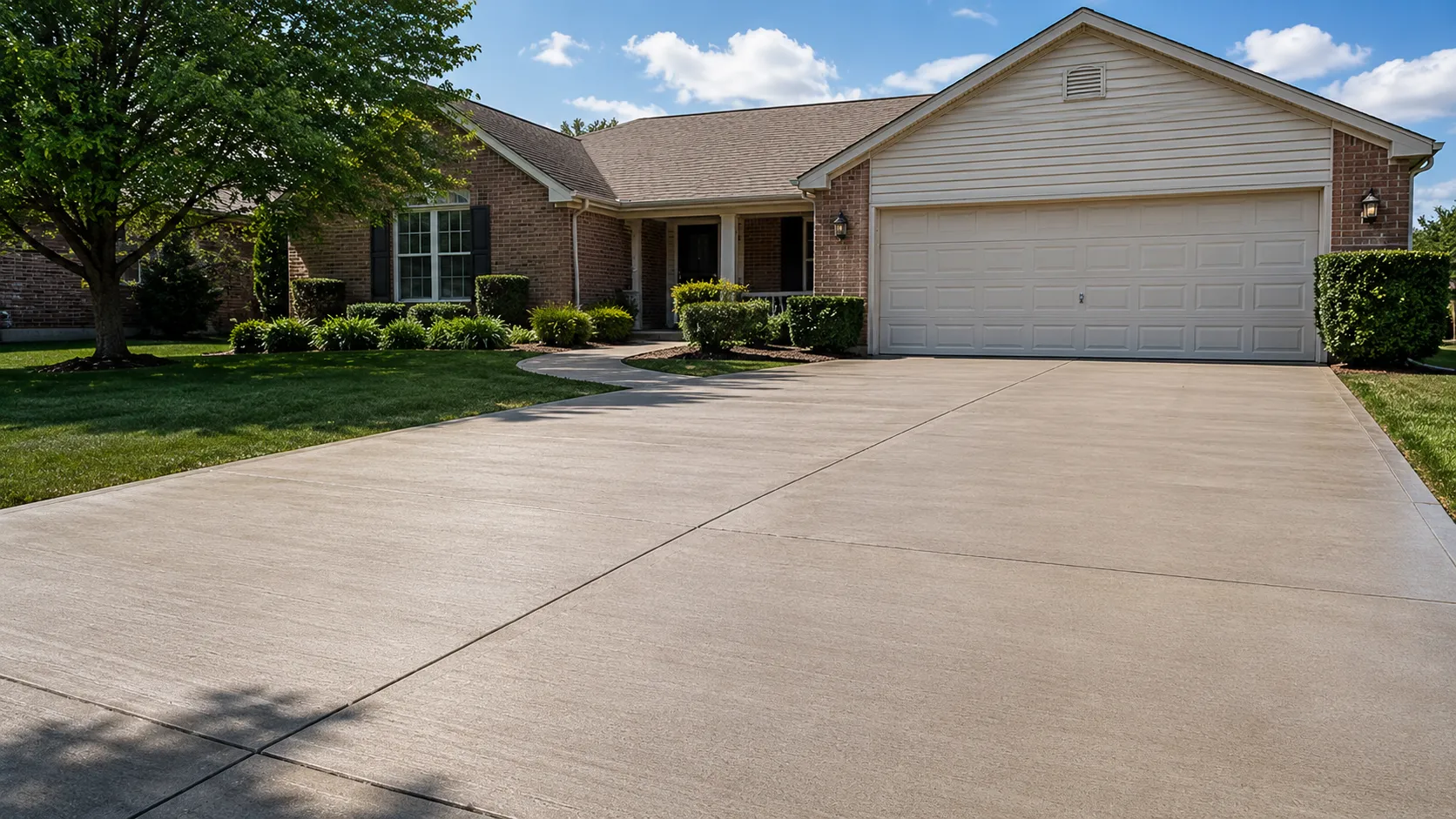
For standard gray broom-finish driveways, patios, sidewalks and porches, we generally recommend a professional penetrating water-based sealer. Instead of building a glossy film on top, this type of sealer penetrates the concrete and helps reduce the absorption of water and deicing salts while preserving the concrete’s natural appearance and texture.

This is normally the best option for homeowners who want protection without making their driveway shiny, darker or noticeably coated.

  • Natural, non-gloss appearance
  • Penetrates rather than creating a decorative surface film
  • Helps reduce water and deicing-salt absorption
  • Allows the broom texture to remain visible
  • Appropriate for many new and existing exterior concrete surfaces
  • Especially useful for driveways, sidewalks and broom-finish patios
Expected appearance: The concrete should retain a natural look. A penetrating sealer is not intended to create the rich, glossy appearance associated with stamped concrete.
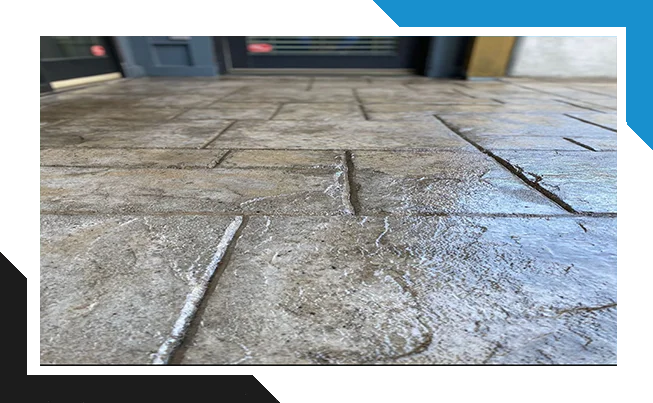
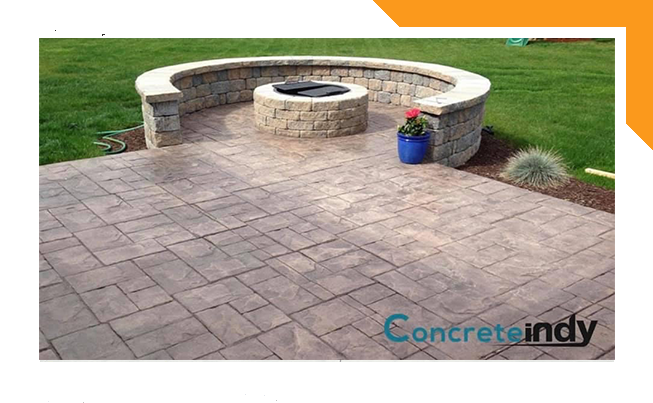
Close-up of textured stamped concrete with a color-enhancing sheen

Stamped Concrete: Solvent-Based Color-Enhancing Sealer

Most exterior stamped concrete is maintained with a compatible solvent-based acrylic sealer. This type of sealer forms a thin, maintainable film over the decorative surface, deepens the concrete’s color and improves the contrast between the base color, antiquing and stamped texture.

Before resealing, we evaluate the existing coating. Applying new sealer over an incompatible, excessively thick, cloudy or peeling coating can make the problem worse. Proper preparation and thin, uniform applications are critical.

  • Enhances stamped concrete color
  • Restores a richer decorative appearance
  • Improves contrast in stamped texture
  • Creates a maintainable protective film
  • Available in different finished appearances depending on the approved system
  • Compatible traction material may be added where appropriate
Expected appearance: Stamped concrete generally becomes darker, richer and more defined after a compatible color-enhancing sealer is applied.

Why Seal Exterior Concrete in Indiana?

Exterior concrete is porous. Rain, melting snow, road residue, deicing salts, oil and other liquids can enter an unprotected surface. Central Indiana’s changing temperatures and winter exposure make reducing that absorption an important part of concrete maintenance.
The correct sealer cannot make concrete indestructible, waterproof the entire slab or prevent every crack. It can, however, help reduce exposure at the surface and make the concrete easier to maintain.

Reduce Water and Salt Absorption

A penetrating sealer can help limit the amount of water and deicing residue entering porous broom-finish concrete.

Help Preserve Decorative Color

A compatible stamped-concrete sealer can deepen faded-looking color and help protect the decorative surface from normal weather and use.

Make Maintenance Easier

Sealed concrete may give homeowners more time to remove certain spills, dirt and road residue before they penetrate deeply.

Improve the Finished Appearance

Broom-finish sealer can preserve a natural appearance, while stamped-concrete sealer can create a richer and more defined decorative finish.

Create a Maintainable Surface

Exterior sealer is a maintenance product. It can be inspected and renewed as exposure, traffic and weather gradually wear it down.

What concrete sealer does not do

Sealer does not reinforce the slab, correct an unstable base, stop all cracking, repair scaling, fix drainage or make an outdoor surface completely slip-proof.

Gray residential concrete patio after a sealing application

New Concrete Driveway? Seal It Before Its First Full Indiana Winter

Many homeowners in new Central Indiana communities receive a broom-finish driveway, sidewalk, porch or patio and are told to have the concrete sealed during the first year. The goal is not to coat new concrete too early. The goal is to apply the correct penetrating sealer after the slab is ready and before it experiences years of rain, snow, freeze-thaw exposure and deicing residue.

The correct application date depends on the age and condition of the concrete, moisture, weather, any curing compound that was used and the requirements of the selected sealer. Concrete Indy reviews those conditions instead of choosing an arbitrary date.

When the concrete is ready, sealing it before prolonged winter exposure can help reduce water and deicing-salt absorption while keeping a natural broom-finish appearance.

Recently moved into a new home?

Send us the property address and several photographs. We can often measure a straightforward driveway or patio from aerial imagery and prepare a quote remotely.

Request a New-Driveway Sealing Quote

Get a Remote Concrete Sealing Quote

You may not need to wait for an estimator to visit your property. For many standard driveway, sidewalk and patio sealing projects, Concrete Indy can review the address, customer photographs and available aerial imagery to estimate the concrete area.

When the surface is clearly visible and the project appears straightforward, we may be able to provide a quote the same business day or the following business day. Complex stamped-concrete restoration, failed sealer, unknown coatings, difficult access or surfaces hidden from aerial imagery may still require an in-person inspection.

What to Send Us

  • Project address
  • Wide photographs of the entire concrete area
  • Close photographs showing the surface texture and condition
  • Whether the concrete is broom-finished, stamped, exposed aggregate or unknown
  • Approximate age of the concrete
  • Whether it has been sealed before
  • Approximate date of the last sealer application
  • Photographs of cloudy, peeling, faded or blotchy areas
  • Any access restrictions or nearby landscaping concerns

Concrete Surfaces We Clean and Seal

Concrete Driveway Sealing

Protect new or existing broom-finish driveways with a penetrating, natural-look sealer selected for exterior concrete driveways.

Concrete Patio Sealing

Clean and seal broom-finish patios while preserving their natural texture, or reseal decorative concrete patios with a compatible color-enhancing system.

Stamped Concrete Resealing

Restore richer color and improve stamped texture definition after the original sealer has worn. Stamped and decorative concrete.

Sidewalks, Walkways and Porches

Reduce absorption on exposed concrete surfaces that receive rain, snow, foot traffic and winter residue.

Exposed Aggregate Concrete

Evaluate whether the surface needs a natural penetrating treatment or a compatible color-enhancing sealer based on its condition and desired appearance.

Pool Decks & Outdoor Entertainment Areas

Clean and seal eligible surfaces while considering wet-area traction and the compatibility of the existing coating.

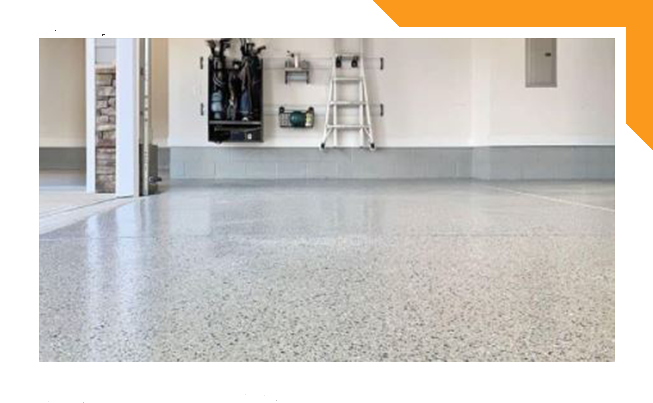
Looking for a garage-floor finish?

Garage floors that need a durable decorative wear surface are usually better served by a professional coating system. Visit our Concrete Coatings page to compare those options.

STAMPED CONCRETE RESTORATION

Bring Old Stamped Concrete Back to Life

Old stamped concrete does not always need to be removed and replaced. In many cases, the stamped pattern and underlying slab remain serviceable, but the decorative surface has become dull, faded, uneven or blotchy.

Concrete Indy can evaluate the existing finish, clean the surface, correct failed or incompatible sealer when necessary, restore accent color and apply a compatible decorative sealer. The result can be a much richer appearance without replacing the entire patio, walkway, porch or pool deck.

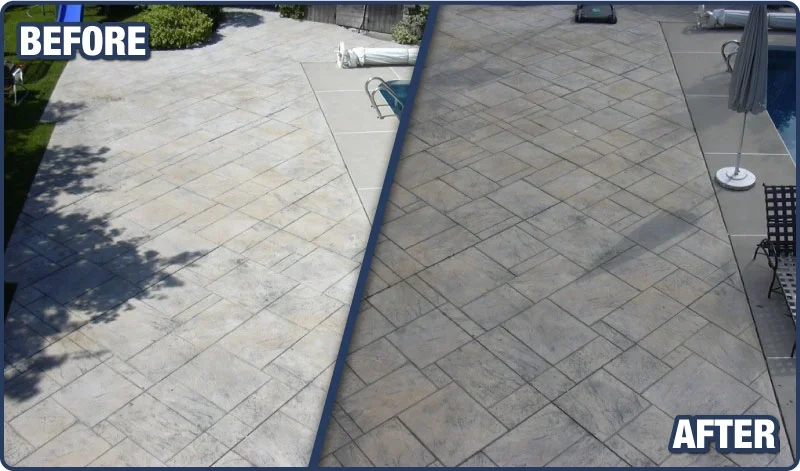
Before-and-after view of faded stamped concrete after color enhancement and resealing
Faded stamped concrete can often regain color, contrast and definition through proper cleaning, antiquing and resealing. Results depend on the condition of the slab and the existing coating.

Why Older Stamped Concrete Becomes Faded or Blotchy

Some older stamped concrete was created with dry-shake or powder color hardener worked into the surface. Although a properly installed color-hardener system can create a durable decorative layer, years of traffic, weather, aggressive cleaning, antiquing loss and coating wear can leave exposed areas lighter than protected areas.

The stamped pattern may still be visible, but its color can look washed out, inconsistent or nearly absent in high-wear locations. Old sealer can also become cloudy, worn or uneven, making the surface appear worse.

Cleaning alone may improve the appearance, but cleaning does not always replace lost decorative contrast. When the surface is a good candidate, additional antiquing color and compatible sealer can restore definition in the stamped texture.

Restoration Qualification

Not every faded slab needs more color.

Some stamped concrete regains much of its deeper appearance after proper cleaning and compatible sealer.

Other surfaces need antiquing restoration, old-sealer correction or complete stripping.

We evaluate the condition before recommending the process.

OUR PROCESS

Our Stamped Concrete Restoration Process

Every stamped concrete restoration project begins with evaluating the existing decorative surface before recommending the proper restoration system.

Inspect the Slab and Existing Sealer

We review the stamped pattern, wear, moisture, surface condition and signs of previous coating failure.

Test Compatibility

We determine whether the existing coating can be cleaned and recoated or whether correction and removal are required first.

Clean and Prepare the Surface

Dirt, organic growth, residue and loose material must be removed before color or sealer is applied.

Correct Failed Sealer

Cloudy, peeling, excessively thick or incompatible coatings may require solvent correction, stripping or mechanical removal.

Restore EZ-Tique Color

When appropriate, we can apply an EZ-Tique antiquing wash or another compatible decorative-color restoration system. Accent color settles into lower areas of the stamped texture and helps restore contrast and definition.

Apply a Compatible Decorative Sealer

After the surface is properly prepared and dry, we apply the approved color-enhancing sealer in controlled, uniform applications. Compatible traction material may be included where appropriate.

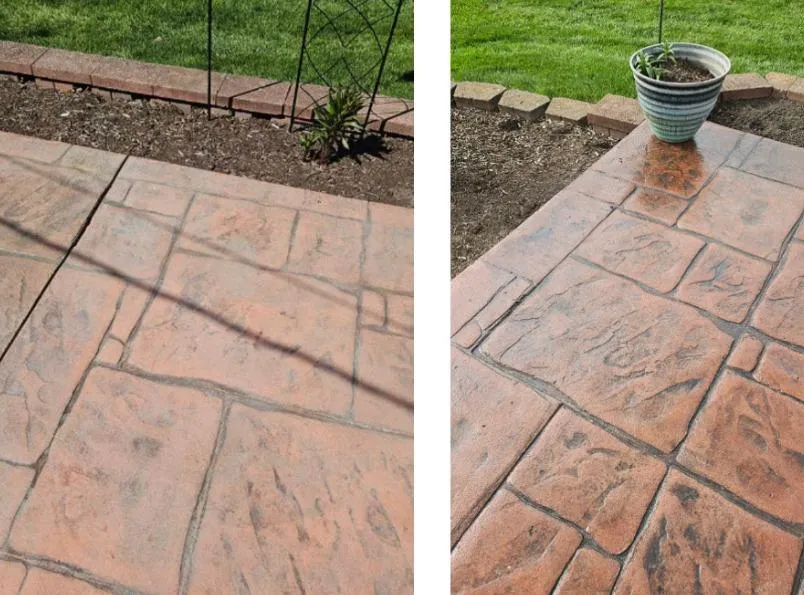
Brown stamped concrete courtyard with enhanced color and surface sheen
DECORATIVE RESTORATION

Restore the Beauty of Existing Stamped Concrete

Many stamped concrete patios, walkways and pool decks still have a solid structural slab beneath them. Instead of replacing the concrete, restoration focuses on improving the decorative finish through proper cleaning, correcting failed sealer when necessary, restoring accent color and applying a compatible protective sealer.

Every project is evaluated individually because some surfaces only require cleaning and resealing, while others benefit from antiquing color restoration using EZ-Tique before the new decorative sealer is applied.

Request a Restoration Quote

Wondering Whether Your Stamped Concrete Can Be Restored?

Send us several photographs along with your address. We'll evaluate the condition of the concrete and recommend whether cleaning, resealing, antiquing restoration or sealer removal may be the best solution.

Concrete Sealer Care

Does the Old Concrete Sealer Need to Be Removed?

Understanding when concrete sealer removal is necessary helps prevent coating failures and protects your surface investment.

When Removal Is Not Needed

Not every resealing project requires complete removal. If an existing solvent-based acrylic sealer is compatible, well bonded and simply worn, the surface may be cleaned, prepared and recoated.

When Problems Exist

Cloudy, white, peeling, bubbling, flaking, excessively thick or incompatible coatings can trap problems beneath a new layer instead of fixing them.

Professional Correction

Compatible solvent-based acrylic coatings may sometimes be corrected with controlled xylene treatment. More severe cases may require chemical stripping or mechanical preparation.

Possible Sealer Removal Methods

The correct approach depends on the coating type, surface condition and desired finish.

Chemical Stripping Grinding Media Blasting Dry-Ice Blasting Abrasive Blasting Sandblasting

Signs That Sealer May Need Correction or Removal

Cloudy or milky-white areas
Peeling or flaking film
Uneven gloss
Trapped moisture
Heavy buildup
Unknown coatings

Safety Information

Sealer removal involves professional chemicals, equipment, ventilation, containment and disposal considerations. This is not intended to be a do-it-yourself chemical guide.

Official surface-preparation guidance distinguishes between re-emulsifying a compatible coating with xylene and actually stripping it. Chemical or mechanical removal may be required when solvent correction is insufficient. (Brickform)

Our Process

Our Concrete Cleaning and Sealing Process

We follow a detailed preparation and sealing process to help protect your concrete and achieve long-lasting results.

01

Review the Project

We review photographs, measurements, access, concrete type, age and known sealer history. Straightforward projects may be quoted remotely.

02

Identify the Surface and Existing Coating

We determine whether the concrete is broom-finished, stamped, exposed aggregate or previously coated and look for compatibility concerns.

03

Clean the Concrete

The surface is cleaned to remove dirt, organic material, road residue and other contaminants that could interfere with penetration or adhesion.

04

Address Failed Sealer or Restoration Needs

When necessary, we correct or remove failed coating and restore decorative antiquing before applying new sealer.

05

Allow the Concrete to Dry

Sealer should not be applied to a surface that is too wet or when weather falls outside the selected product’s requirements.

06

Apply the Appropriate Sealer

We apply a penetrating water-based system to eligible broom-finish concrete or a compatible color-enhancing solvent-based system to eligible stamped concrete.

07

Provide Aftercare Instructions

Drying and return-to-use times vary by product, temperature, humidity, sunlight and surface conditions. Concrete Indy provides project-specific instructions rather than using one generic timeline for every application.

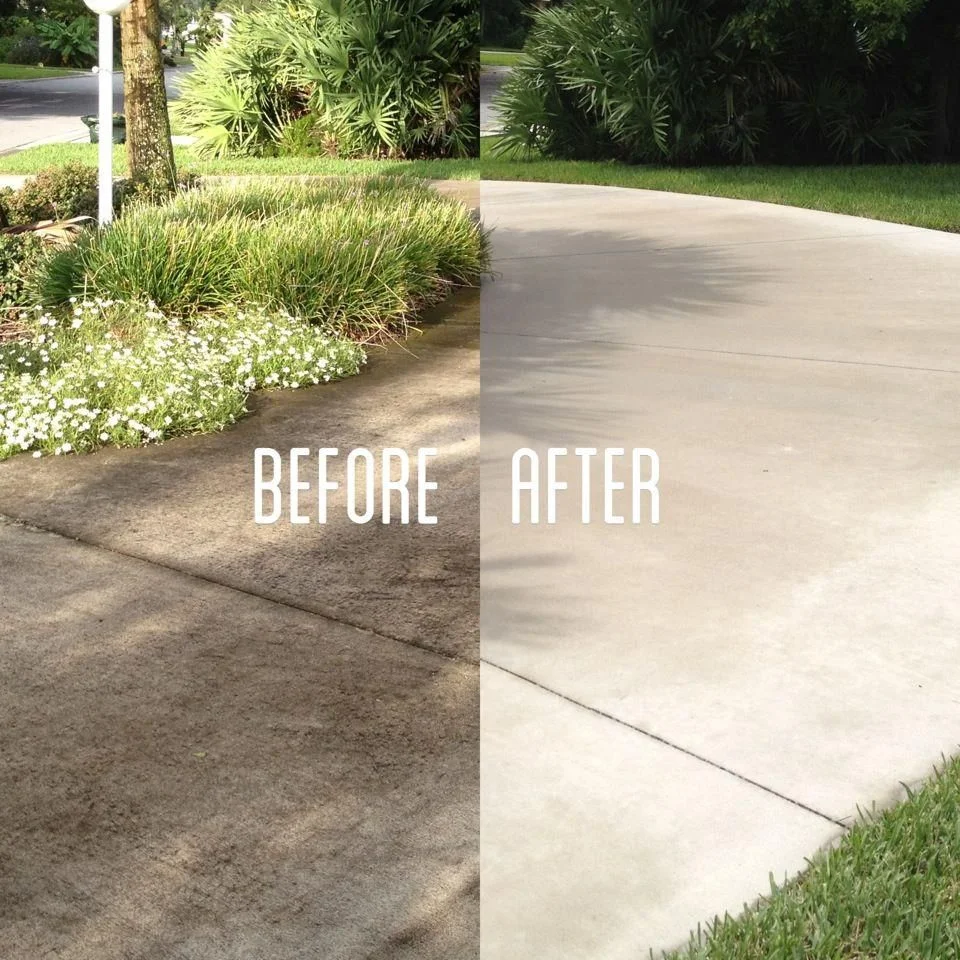
Before-and-after cleaning of a residential concrete driveway

Thorough surface cleaning is an important preparation step, but cleaning and sealing are separate parts of the service.

Maintenance Guide

How Often Should Concrete Be Resealed?

There is no responsible one-size-fits-all resealing schedule. Product type, sun exposure, traffic, winter residue, standing water, cleaning methods and previous applications all affect performance.

Broom-Finish Concrete

The maintenance interval for a penetrating water-based sealer depends on the specific product and exposure. The surface should be evaluated for water absorption and maintained according to the approved sealer system rather than automatically recoated every year.

Stamped Concrete

Stamped concrete should be visually inspected each year. Concrete Indy generally evaluates the original decorative sealer around the two-year mark and plans continuing maintenance around every three years, but the actual condition of the surface controls the recommendation.

Why More Sealer Is Not Always Better

Excessive film-forming sealer can create heavy gloss, a plastic appearance, whitening, trapped moisture, bubbles, peeling and reduced traction. A surface should be inspected before another coat is added.

Need More Information?

Read our complete guide: How Often Should Stamped Concrete Be Sealed?

Why Choose Us

Why Choose Concrete Indy for Concrete Sealing?

Concrete sealing is more than pressure washing a surface and spraying on a generic product. The finish, porosity, previous coating, weather and desired appearance all affect the correct preparation and sealer selection.

The Right Sealer for the Surface

We distinguish between natural-look penetrating sealers and color-enhancing decorative sealers.

Stamped Concrete Restoration

We can evaluate faded color, worn antiquing, blotchy areas and failed sealer instead of automatically recommending replacement.

Concrete Experience

Concrete Indy installs and maintains concrete, giving our team a practical understanding of finishes, joints, color systems and surface conditions.

Remote Quote Options

Many straightforward driveway and patio sealing projects can be measured and reviewed without an initial site visit.

In-House Teams

Concrete Indy uses its own crews for its concrete work so the company can better manage communication, preparation and workmanship.

Established Local Reputation

Concrete Indy is a locally owned company with more than 400 five-star reviews serving Indianapolis and surrounding Central Indiana communities.

Ready to Protect Your Concrete?

Get a professional evaluation and the right sealing system for your driveway, patio, sidewalk or stamped concrete.

Our Service Area

Concrete Sealing Throughout Indianapolis and Central Indiana

Concrete Indy provides concrete cleaning, driveway sealing, patio sealing, stamped concrete resealing and decorative concrete restoration throughout Indianapolis and surrounding Central Indiana communities.

Areas We Commonly Serve

Common service areas include Indianapolis, Fishers, Carmel, Noblesville, Westfield, Zionsville, McCordsville, Fortville, Brownsburg, Avon, Plainfield, Greenwood, Franklin, Greenfield, Geist and Lawrence.

Indianapolis Fishers Carmel Noblesville Westfield Zionsville Avon Plainfield Greenwood Greenfield Brownsburg Lawrence

Serving Central Indiana

Whether you need concrete driveway sealing, patio sealing, decorative concrete restoration or stamped concrete resealing, our team serves homeowners throughout the Indianapolis metropolitan area.

FAQs

Frequently Asked Questions About Concrete Sealing

Find answers to common questions about concrete driveway sealing, stamped concrete maintenance, penetrating sealers, decorative sealers and long-term concrete protection.

What is the best concrete sealer for a broom-finish driveway?

Concrete Indy generally recommends a penetrating water-based sealer for standard exterior broom-finish concrete. It penetrates the concrete rather than creating a glossy decorative film, helping reduce absorption while preserving a natural appearance.

What type of sealer is best for stamped concrete?

Most exterior stamped concrete is maintained with a compatible solvent-based acrylic sealer because it enhances color and helps protect the decorative surface. The existing coating should be identified and evaluated before new sealer is applied.

Should new concrete be sealed before winter?

Once the concrete is sufficiently cured and the surface and weather meet the selected product’s requirements, sealing before prolonged winter exposure can help reduce water and deicing-salt absorption. Concrete Indy reviews the concrete age, moisture and known curing products before recommending application.

How long after concrete is poured can it be sealed?

The correct waiting period depends on the sealer, concrete condition and curing method. Some decorative film-forming products require approximately 28 days of curing, while penetrating systems may have different requirements. We verify the selected product’s instructions rather than applying one timeline to every slab.

How often should concrete be resealed?

It depends on the product and exposure. Stamped concrete should be inspected annually and often requires evaluation around two to three years. The maintenance interval for penetrating broom-finish sealer depends on the product, traffic, weather and water absorption. Concrete should be recoated based on condition, not the calendar alone.

Can faded or blotchy stamped concrete be restored?

Often, yes. Depending on the surface, restoration may include cleaning, old-sealer correction, antiquing color such as EZ-Tique and a compatible color-enhancing sealer. A test area and inspection help determine what the slab needs.

Can old concrete sealer be removed?

Many coatings can be corrected or removed, but the method depends on their chemistry and condition. Options may include a compatible solvent treatment, dedicated chemical stripper or carefully selected mechanical preparation. Xylene is not a universal stripper, so the coating should be evaluated first.

Does concrete sealer prevent cracking?

No. Sealer helps reduce surface absorption and maintain appearance, but it does not reinforce the slab or eliminate cracking. Soil, base preparation, thickness, joints, drainage, reinforcement, roots and loading all affect concrete movement.

Will sealed concrete become slippery?

Penetrating sealer usually preserves the concrete’s existing surface texture. Film-forming stamped-concrete sealer can affect traction, particularly when wet. A compatible traction additive may be included where appropriate, but no outdoor surface can be guaranteed slip-proof.

Can Concrete Indy quote concrete sealing remotely?

In many cases, yes. Send the project address, wide photographs, close surface photographs, concrete type, approximate age and known sealer history. When the area can be measured and the condition is straightforward, Concrete Indy may provide a quote the same business day or the following business day. Complex restoration may require a site visit.

How long before I can walk or drive on newly sealed concrete?

Return-to-use time depends on the sealer, number of applications, temperature, humidity, sunlight and surface conditions. Concrete Indy provides project-specific aftercare instructions after the work is completed. Do not rely on a generic timeline from a different product.

Get Your Concrete Sealing Quote

Whether you have a new broom-finish driveway that needs protection before winter, a patio that absorbs water or old stamped concrete that has become faded and blotchy, Concrete Indy can help determine the right next step. Send us the property address and photographs. Many straightforward concrete sealing projects can be measured and quoted remotely.

Serving Indianapolis, Fishers, Carmel, Noblesville, Westfield, Zionsville, Greenwood, Avon, Plainfield and surrounding Central Indiana communities.
Customer Reviews

Over 400+ 5-Star Reviews

See why homeowners and businesses across Central Indiana choose Concrete Indy for driveways, patios, stamped concrete, coatings, commercial concrete, and more.

Our Other Services!