Concrete Indy Learning Center
How to Prevent Concrete Cracking
You cannot guarantee that concrete will never crack. The practical goal is to reduce avoidable cracking, plan for movement and protect the slab as it develops strength. That starts before the concrete truck arrives and continues with clear aftercare instructions.
Updated November 17, 2026
On this page
Before the pour: agree on the intended use
Tell your contractor how you will actually use the area. A walking path, passenger-car driveway and area carrying heavier vehicles are different design requests. Mention RVs, trailers, delivery access, hot tubs and concentrated loads during planning, not after installation.
Ask what the proposed design includes and which uses it does not cover. Keep the answers with your estimate so everyone is working from the same expectations.
Ask how support and drainage will be addressed
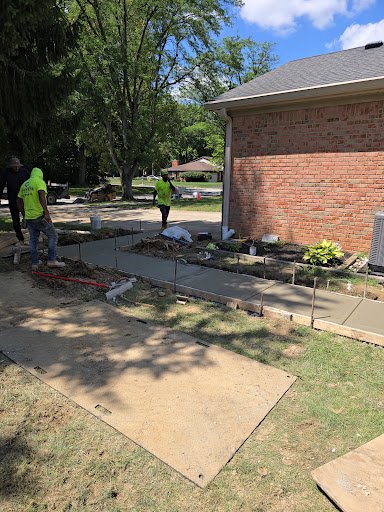
A stable, uniformly prepared supporting surface matters. The plan should address soft areas and runoff rather than relying on concrete to bridge an underlying problem. NRMCA identifies poor subgrade preparation as a contributor to cracking.
Tell the contractor about known wet areas, downspouts beside the slab and recently backfilled utility trenches. Ask where water will go after the project is finished. A new surface should not conceal an unresolved drainage concern.
Technical background: NRMCA CIP 4: Cracking Concrete Surfaces.
Plan joints, not just the finished look
Ask to see the joint layout before placement. Slab shape, thickness, restraints and cutting method affect the plan. Near-square panels are generally preferable to long, narrow or L-shaped panels. Timing matters as well as location: a decorative-looking line is not automatically an effective contraction joint.
Avoid a one-size-fits-all spacing rule detached from the actual project design.
Protect the concrete while it gains strength
Curing manages moisture and temperature so cement hydration can continue. It is not simply waiting for the surface to look dry. NRMCA describes several curing methods and cautions against alternating wetting and drying during moist curing.
Let the crew specify the method for your finish and conditions; do not improvise with water or coverings afterward. Ask for written instructions for foot traffic, pets, vehicles, furniture and equipment. Follow project-specific dates rather than assuming every slab is ready on the same schedule.
Understand reinforcement’s role
Steel reinforcement can help limit crack width, but it does not make concrete crack-proof. Synthetic fibers also differ: microfibers and macrofibers do not perform identical roles. Fiber selection is not permission to omit required structural steel, make a slab thinner or arbitrarily widen joint spacing.
Ask what reinforcement is included and what it is intended to accomplish.
Your handover checklist
- Who should you contact about a change?
- Where are the joints, and what care do they need?
- When may each type of traffic return?
- What curing protection must stay in place?
- Which cleaning and winter-care instructions apply?
- Is a sealer included, and what maintenance does that product need?
Frequently asked questions
Does stronger concrete mean no cracking?
No. Compressive strength alone does not describe shrinkage behavior. Mix selection, construction and curing need to work together.
Can sealer prevent every crack?
No. A surface-care product is not a replacement for joint planning, proper support or a suitable slab design.
What if a crack appears despite good preparation?
Document it and contact the installer. The next step depends on its cause and condition, not a blanket assumption that replacement is necessary.
Discuss your project
Planning an Indianapolis-area driveway or patio? Discuss intended use, drainage and finish with Concrete Indy before finalizing the scope.
Request a concrete assessment or quoteBack to the Learning Center